Find Quiet Focus in Everyday Tasks

Today we explore mindful chores for everyday calm, transforming ordinary household moments into gentle rituals that soften anxiety, brighten attention, and nurture steadiness. With simple breathing cues, sensory anchors, and compassionate micro-habits, you’ll discover how soap bubbles, folded cotton, and clear countertops can guide your mind home. Join the conversation, share your experiments, and subscribe to receive weekly prompts that help you build a kind, sustainable rhythm of care for your space, mindset, and relationships.

Dishwashing as a Soft Reset

A sink of dishes can become a sanctuary when approached with presence rather than pressure. Warm water, steady breath, and deliberate motions invite a soothing cadence that unclutters thoughts while you unclutter glasses. Instead of rushing, let the rhythm of washing, rinsing, and placing become a simple meditation. Notice how the sink becomes an anchor for your mood. By closing the loop with a tidy drying rack, you create visible proof that progress can be peaceful, not punishing.

Decluttering That Calms, Not Drains

Let tidying be humane and strategic, not a marathon that burns out your spirit. Start impossibly small, celebrate visible wins, and store memories in ways that honor stories without crowding shelves. When you reduce friction and decision fatigue, a calmer room meets a calmer mind. Focus on what supports your current life, not a past identity. With compassionate limits, consistent cues, and community accountability, order grows gently and stays for the long haul.

The One-Shelf Win

Pick a single shelf or drawer, set a ten-minute timer, and commit only to that territory. Take a before photo to document reality without shame. As you sort, ask which items still serve today’s values and routines. Afterward, take an after photo and write three sentences about what feels lighter. Momentum comes from proof, not perfection. Share your tiny triumph with a friend or comment thread to convert private progress into motivating, communal energy.

The Three-Bag Method

Label three bags Keep, Donate, Recycle and establish clear rules before you begin. If an object was unused for a year and holds no essential function or deep joy, it moves on. Set a playlist that keeps you gently moving but never rushes your choices. When indecision strikes, create a Maybe box with a date. If it remains untouched by then, let it go. Finishing by delivering donations quickly prevents backsliding and builds trust in your process.

Memory Without Stuff

Honor sentiment by saving the story, not the bulk. Photograph handwritten notes, record a voice memo recalling the moment, or paste a small swatch into a slim memory journal. Ask loved ones for a single sentence about why an item mattered, then keep that sentence instead. The meaning lives in connection, not accumulation. By curating symbols rather than stockpiles, you lighten shelves while keeping hearts full. Share your favorite memory-keeping trick so others can try it tonight.

Laundry as Moving Meditation

Sorting, washing, and folding can become gentle choreography that aligns breath, body, and attention. The textures of cotton, the warmth from the dryer, and the geometry of stacks invite focus without strain. When you let the cycle pace your day, you trade frantic multitasking for steady intervals. Keep motions smooth, celebrate small completions, and regard each folded shirt as a small square of restored order. Calm grows with every aligned corner and unhurried inhale.

Kitchen Touchpoints That Soothe

Small pauses in the kitchen can anchor an entire day. Wiping a countertop with patient strokes, boiling water for tea, and resetting the cutting board invite tranquil focus without stealing time. By treating these touchpoints as gentle check-ins, you ground your attention, reduce decision clutter, and elevate care into craft. Simple tools—a clean cloth, a kettle, a sharp knife—become companions that guide you toward steadiness, presence, and a reliably welcoming home atmosphere.

The 60-Second Reset

Set a short timer and clear a single surface. Move slowly, noticing edges, corners, and your breath. As crumbs disappear, imagine thoughts organizing too. The brief limit reduces resistance, making beginnings easier. Add a finishing touch—a small plant rotated, a cutting board oiled, a cup placed just so—to mark completion. These micro-resets stack throughout the day, creating a felt sense of continuity. Share your favorite one-minute ritual to inspire others seeking quick calm.

Warm Water Pause

When the kettle hums, treat waiting as a small retreat. Stand comfortably, unclench your jaw, and rest one hand on your belly. Inhale through the nose for four counts, exhale for six. Feel warmth bloom as steam rises, and choose a mug you love for tactile comfort. Name your intention for the next hour—focus, kindness, or rest. Sip slowly, letting gratitude steep with the tea. This pause turns heat into heart-level restoration every single afternoon.

Knife Skills, Calm Mind

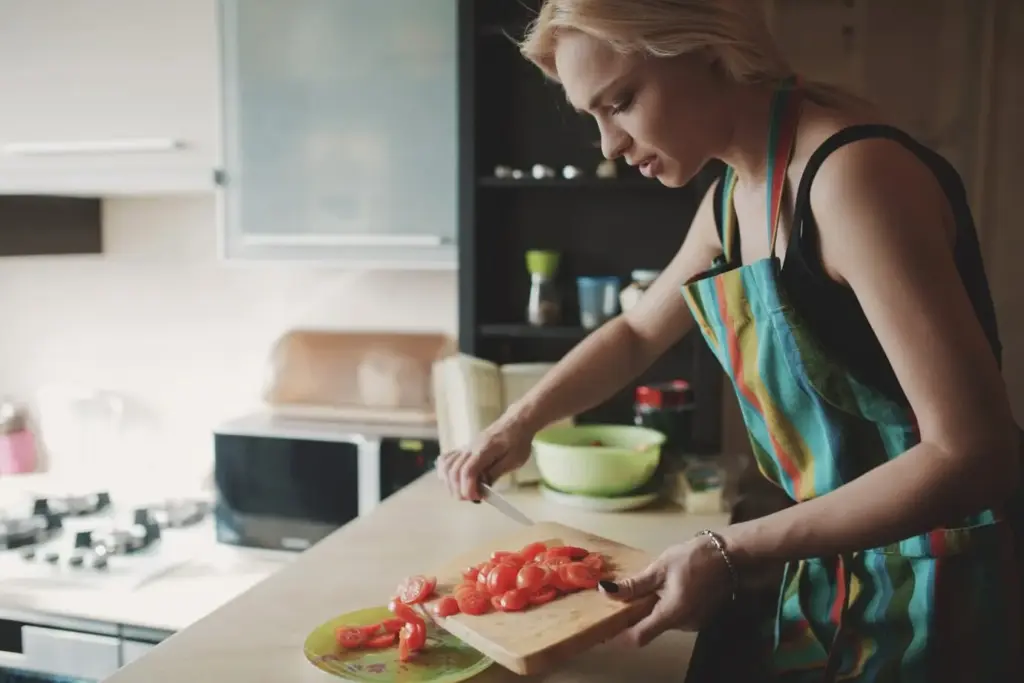
Secure your cutting board, square your stance, and relax your grip. Practice a consistent rocking motion, letting the blade’s rhythm entrain your breath. Focus on uniform pieces, not speed. Safety grows with presence, and beauty follows reliability. When irritation flares, reset posture and shake hands gently. Finish by arranging ingredients with care, admiring simple order you created. Cooking becomes kinder when motions are respectful, and your mind learns to mirror the measured cadence of each slice.

Routines That Stick with Kindness

Lasting habits rarely come from force; they grow from clarity, smallness, and celebration. Link chores to existing cues, keep actions tiny, and reward completion in ways that actually feel rewarding. Track progress publicly enough to build momentum yet privately enough to protect your tenderness. When a day collapses, respond with gentleness and begin again. Over time, the routine becomes identity: you are someone who cares steadily, breathes deeply, and keeps promises to self without harshness.

Anchor Cues that Stick

Attach chores to reliable daily moments, like starting coffee, returning home, or brushing teeth. Name the sequence aloud: After I place my mug, I wipe the counter. Physical anchors reduce decision friction and train the brain to expect calm actions after familiar signals. Keep cues visible—notes, laid-out cloths, pre-filled spray bottles—so beginning is frictionless. Share your best cue in the comments to help others build a supportive chain of gentle, helpful actions.

Tiny Rewards that Matter

Choose rewards that truly feel good: a cozy song, a stretch, sunlight by a window, or writing one grateful sentence. Avoid rewards that undo your progress or cloud your clarity. The brain learns through immediate feedback, so celebrate right away, even for very small wins. Pair the reward with a meaningful phrase—Done is kind—to strengthen the association. Over days, these pleasant closures reinforce consistency, making repetition easier than resistance, and turning chores into moments you actually welcome.

Track, Reflect, Adjust

Use a simple habit grid, dots in a calendar, or a jar of paper slips to tally completions. Weekly, ask three questions: What felt calming, what felt clumsy, what will I tweak? Adjust scope before motivation fades. If evenings fail, try morning. If long blocks stall, try two-minute bursts. Share one insight with a buddy or our community to transform reflection into accountability. Gentle iteration builds resilient routines that survive real life’s wobbles.
Community, Accountability, and Momentum

Calm multiplies when shared. Trading ideas, posting photos of tidy corners, and celebrating tiny victories turns private effort into collective encouragement. Invite a friend to a weekly reset call, join a challenge, or leave a note describing your favorite ritual. Group momentum replaces perfectionism with companionship, reminding you that steady care is a practice, not a test. Together, we build homes that feel supportive, rhythms that feel humane, and days that feel genuinely livable.
Nunutixerelomaka
Privacy Overview

This website uses cookies so that we can provide you with the best user experience possible. Cookie information is stored in your browser and performs functions such as recognising you when you return to our website and helping our team to understand which sections of the website you find most interesting and useful.